
Pope Clement VIII and coffee: Did the Catholic Church really want to ban the Devil's drink?
The story of Pope Clement VIII and coffee is one of the most famous legends in coffee history. According to the story, Catholic clergy wanted to ban coffee because of its connection to the Muslim world and even called it the "Devil's drink." But the Pope supposedly tasted coffee himself and refused to ban it. So how much of this story is historical fact, and how much is a legend created centuries later?
The Legend of Pope Clement VIII and the Coffee Ban
One of the most famous legends in the history of coffee is connected with Pope Clement VIII and the alleged attempt by the Catholic Church to ban coffee. By the end of the 16th century, coffee was already well known in the Ottoman Empire and other parts of the Muslim world, but for most Europeans it remained an unusual drink from the East.
According to the legend, when coffee began to spread in Europe, some members of the Catholic clergy viewed it with suspicion because of its close association with the Islamic world. In later versions of the story, coffee is even called the "Devil's drink" or "Satan's drink." The clergy allegedly asked Pope Clement VIII to ban Christians from drinking coffee.
However, according to the legend, before supporting a ban on coffee, Clement VIII decided to taste the drink himself. He supposedly liked coffee so much that instead of banning it, the Pope joked that such a delicious drink should not be left to Muslims alone.
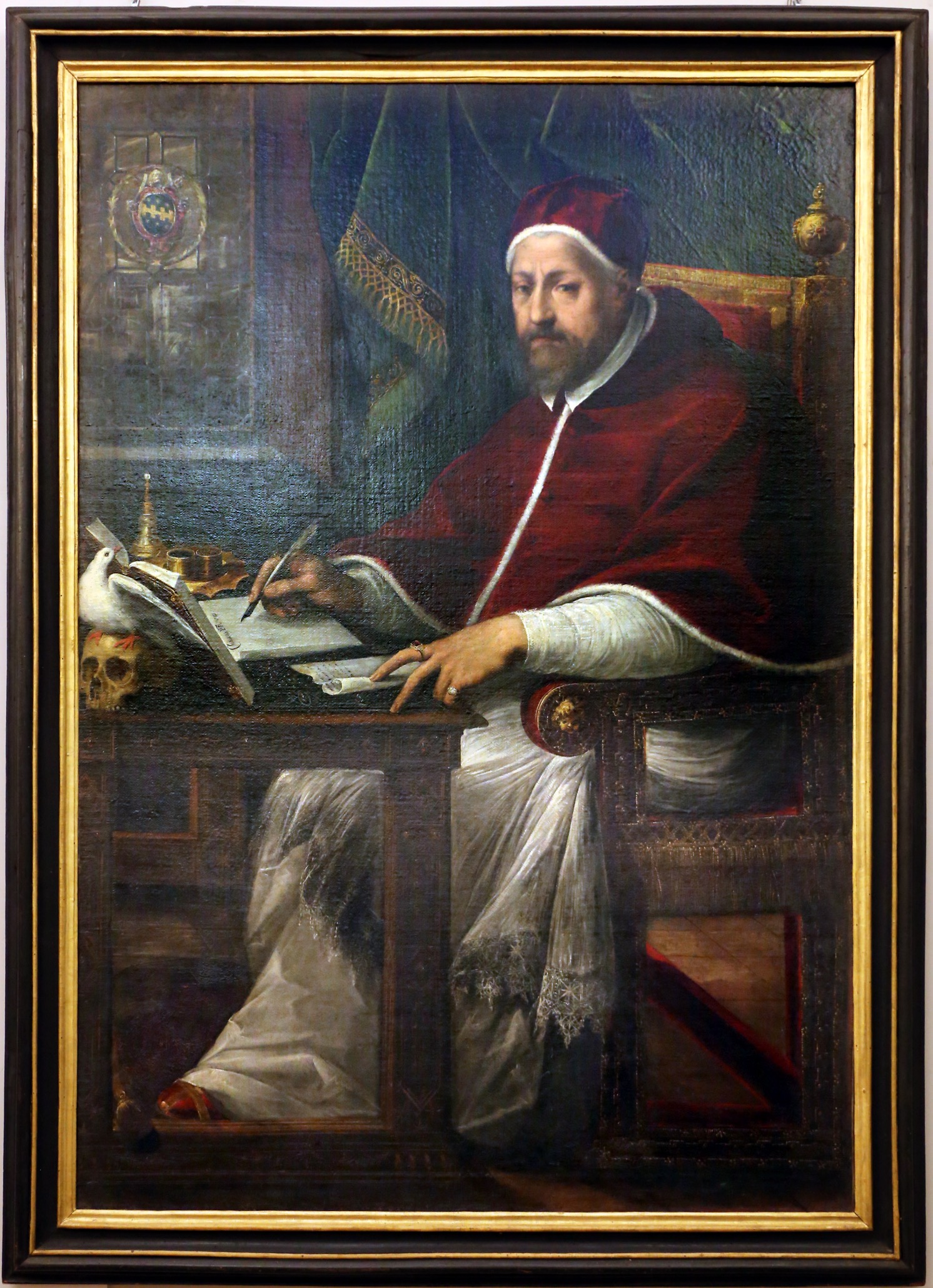 Pope Clement VIII portrait by Giuseppe Cesari, c. 1598
This is also where another popular part of the story comes from - the "baptism of coffee." Some versions of the legend claim that Pope Clement VIII "baptized" coffee, symbolically making the former "Muslim drink" acceptable to Christians. The event is usually dated to around 1600.
However, the story of Pope Clement VIII and coffee, the Catholic Church's supposed coffee ban, the "Devil's drink," and the "baptism of coffee" is not supported by any known contemporary documents. No papal bull or other official document has been found in which Clement VIII banned coffee and later reversed the ban. Therefore, this popular story should be regarded as a legend from the history of coffee rather than an established historical fact.
Myths and Reality About Christianity and the Coffee Ban
What we know for certain is the identity of the main figure in the story - Pope Clement VIII (Ippolito Aldobrandini). He served as pope from 1592 to 1605. This is confirmed by his official Vatican biography. By the time of his pontificate, coffee was already known to European scholars and travelers.
However, there is no documentary evidence of a papal ban. The modern Catholic publication National Catholic Register, when discussing this story, explicitly calls it a legend and notes that there is no document confirming a papal decree concerning coffee: "There is no documentation of such a decree regarding coffee."
In addition, the Vatican's official page on Clement VIII provides biographical information about him but does not mention the coffee story. Nor does it appear among the documented events of his pontificate or in the established historiography of Clement VIII.
The phrases "Devil's drink" and "Satan's drink" are also not supported by contemporary evidence. Even sources that retell the story present it as a legend in which the Pope's advisers supposedly wanted the drink condemned because of its association with the Muslim world. There is also no evidence that the Pope actually said, "This Satan’s drink is so delicious..." This version appeared in later interpretations of the legend, and even authors who quote it often acknowledge that it is unclear whether the story is true at all.
The most colorful part of the legend is that the Pope supposedly decided that "if coffee belongs to the Muslims, it should be 'baptized' so that Christians can drink it too." This is the origin of popular phrases such as "Pope Clement VIII baptized coffee" and "the baptism of coffee." But there is no historical evidence for this part of the legend either. There is no record of any church ritual involving the “baptism of coffee,” nor is there a papal bull or decree officially "baptizing" the drink.
Why Might the Catholic Church Have Wanted to Ban Coffee?
The historical context behind the legend is very interesting. By the end of the 16th century, coffee was distinctly associated with the East in the eyes of Western Europeans. Coffee-drinking culture was already well developed across the Muslim world - in Yemen, Egypt, and the Ottoman Empire.
But perhaps the most important factor that could have contributed to the emergence of the story about the Pope and coffee as the "Devil's drink" was the fact that Clement VIII's pontificate coincided with a period of intense conflict between the Ottoman Empire and Christian states.
In particular, the Pope actively supported the creation of a Christian alliance against the Ottoman Empire during the Long Turkish War (1593–1606). The fighting took place mainly in the territories of present-day Hungary, Slovakia, and the Balkans, exhausted both sides, and eventually ended with the Peace of Zsitvatorok without major territorial changes.
In the Ottoman Empire, however, bans and restrictions on coffee consumption really did exist.