
How Espresso was invented: the history of Italian Espresso
Industrialization, new technology, and the changing coffee trade transformed the way Italians made and drank coffee. Espresso was born from the need to prepare coffee faster and serve a growing number of customers in rapidly expanding Italian cities. What began as a practical solution eventually became one of the most recognizable symbols of Italian coffee culture.
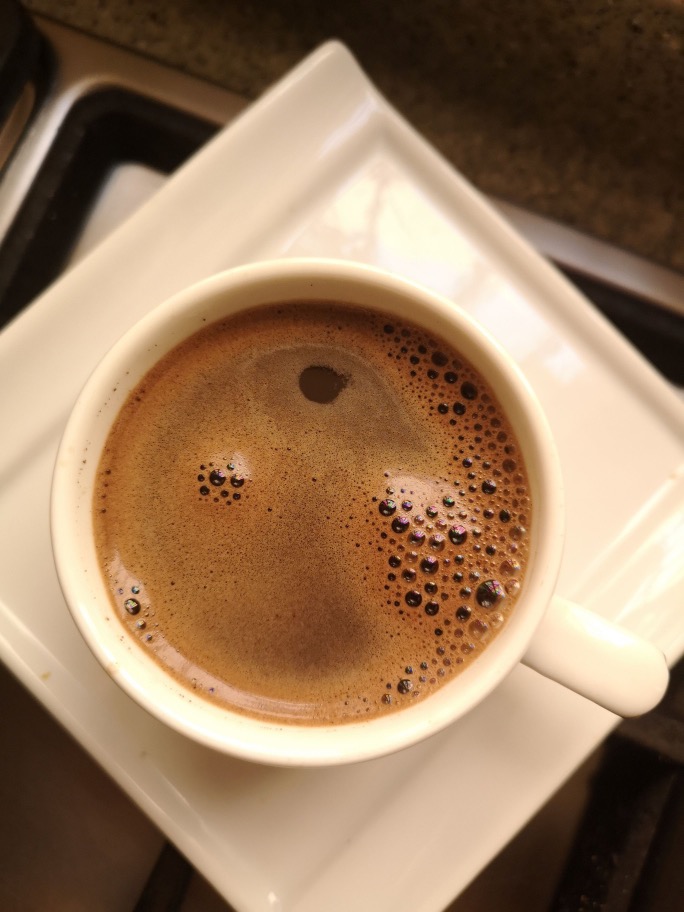
Perhaps we should start with the historical context that preceded the invention of espresso, because without it, the origins of this method of making coffee cannot be fully understood. And yes - espresso is a method of preparing coffee under pressure, not another type of coffee bean. But let's take it one step at a time.
How Industrialization in Italy Led to the Birth of Espresso
In 1871, the process of Italian unification was completed. A unified Kingdom of Italy emerged on the Apennine Peninsula, replacing the conglomerate of separate states and kingdoms that had existed and often fought with one another.
Following the example of England and Germany, the newly formed country began to experience rapid industrial growth. In large cities such as Turin, Milan, and Genoa, the population increased rapidly as peasants moved to the cities and became workers in newly established factories and industrial plants.
A new social class emerged around the accelerating industrialization - factory workers, clerks, entrepreneurs, and railway workers. The pace of life increased dramatically. People no longer had hours for leisurely coffee drinking and long conversations, as had been common in Ottoman coffeehouses of the 18th and 19th centuries.
If in the Ottoman tradition coffee was an occasion for a long conversation, in Italy it increasingly became a short stop on the way to work or during a break. Looking ahead, we can say that this was one of the factors that would later shape the Italian tradition of drinking espresso while standing at the bar.
Technological development, in turn, made it possible to build a machine that could safely operate under pressure. In the 18th century, creating such a machine would have been practically impossible given the level of technology available at the time. By the 19th century, however, steam engines and boilers were already being used on an industrial scale, while precision metalworking equipment, industrial seals, and valves had become available.
How Global Coffee Trade Paved the Way for Espresso
The economic aspect was no less important.
In the 17th and 18th centuries, much of the coffee reaching Europe passed through Ottoman-controlled trade networks. By the 19th century, however, Europe could obtain coffee from Brazil, Indonesia, Central America, and even Ceylon.
The traditional trade route through Constantinople (Istanbul) no longer played the same role it had in the previous century. As coffee became more widely available and demand continued to grow, more and more cafés opened across Italy.
By the end of the 19th century, all these factors had come together. There was a large international coffee market, strong demand for coffee, and the technical ability to create something new.
Anyone who could prepare coffee faster and serve more customers without losing people waiting in line gained a major competitive advantage. Only one thing was missing - a drink that could be prepared in literally a minute.
The Invention of Espresso
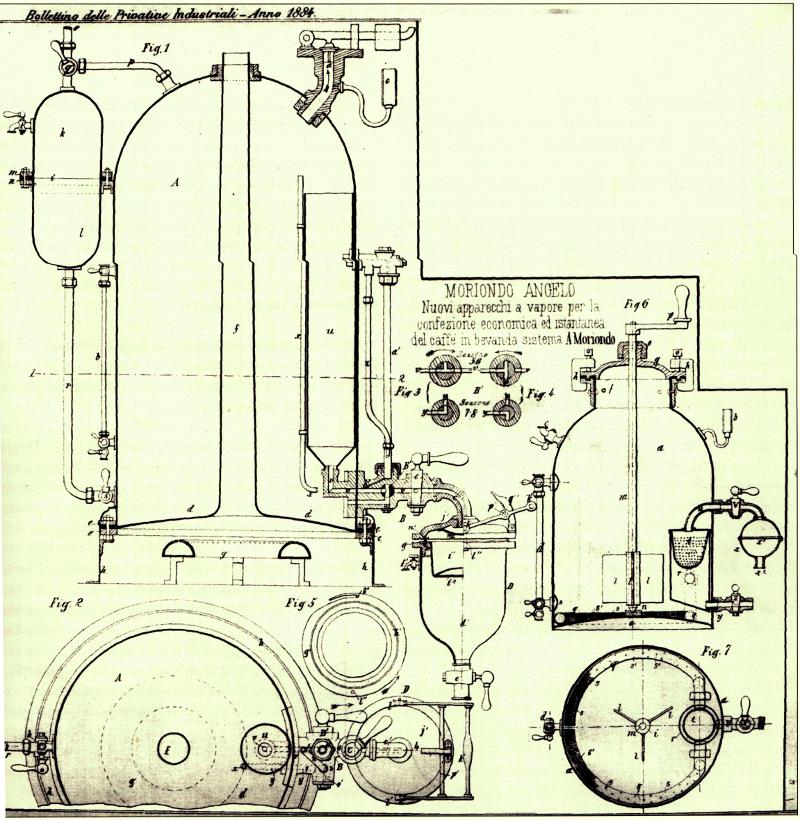

The first machine to use steam and pressure to prepare coffee quickly was patented in 1884 by Angelo Moriondo, an entrepreneur from Turin. His machine brewed coffee in large batches intended to serve several people. His invention is generally regarded as an important predecessor of the modern espresso machine.
Modern espresso began to take shape somewhat later, at the beginning of the 20th century.
In 1901, Luigi Bezzera improved the concept by developing a machine designed to prepare coffee more quickly in individual servings. But it was in 1905, after entrepreneur Desiderio Pavoni acquired Bezzera’s patent and began commercial production, that these machines started spreading more widely through Italian cafés.
Espresso as we know it today appeared several decades later. In 1947 - 1948, Achille Gaggia developed a lever-operated machine that used much higher pressure than earlier steam machines, reaching approximately 8 - 10 bar during extraction.
This made it possible to produce the characteristic golden layer of crema on top of the coffee - one of the features now strongly associated with modern espresso.
What Is Espresso?
Espresso is a small serving of concentrated coffee, typically around 25 - 30 ml.
To prepare a traditional single espresso, about 7 - 9 g of finely ground coffee is used. The coffee is placed in a portafilter, evenly distributed and tamped. Hot water at approximately 90 - 96°C (194 - 205°F) is then forced through the coffee under pressure.
Modern espresso machines typically operate at around 9 bar during extraction. The extraction usually takes about 25 - 30 seconds.
The result is a rich, concentrated coffee with a characteristic layer of crema on the surface.
Why Espresso Became So Popular
Espresso could be prepared in roughly 20 - 30 seconds, allowing customers to get their coffee without spending much time waiting and enabling cafés to serve large numbers of people quickly.
It was also served immediately after extraction, while still very hot, delivering an intense and concentrated coffee experience.
Espresso is not only a coffee drink in its own right but also the foundation of many popular coffee drinks, including cappuccino, latte, Americano, and macchiato. They are made by adding water, milk, or milk foam to espresso.
For example, an Americano combines espresso with hot water, while a cappuccino combines espresso with steamed and foamed milk.