
Why are Turkish coffee cups so small?
The size of the Turkish coffee cup - the fincan - was influenced by a combination of economic, historical, cultural, and taste-related factors. Its small size was well suited to the strong, concentrated coffee traditionally served in the Ottoman Empire. Over time, this compact cup became an important part of Turkish coffee culture and the ritual of drinking coffee
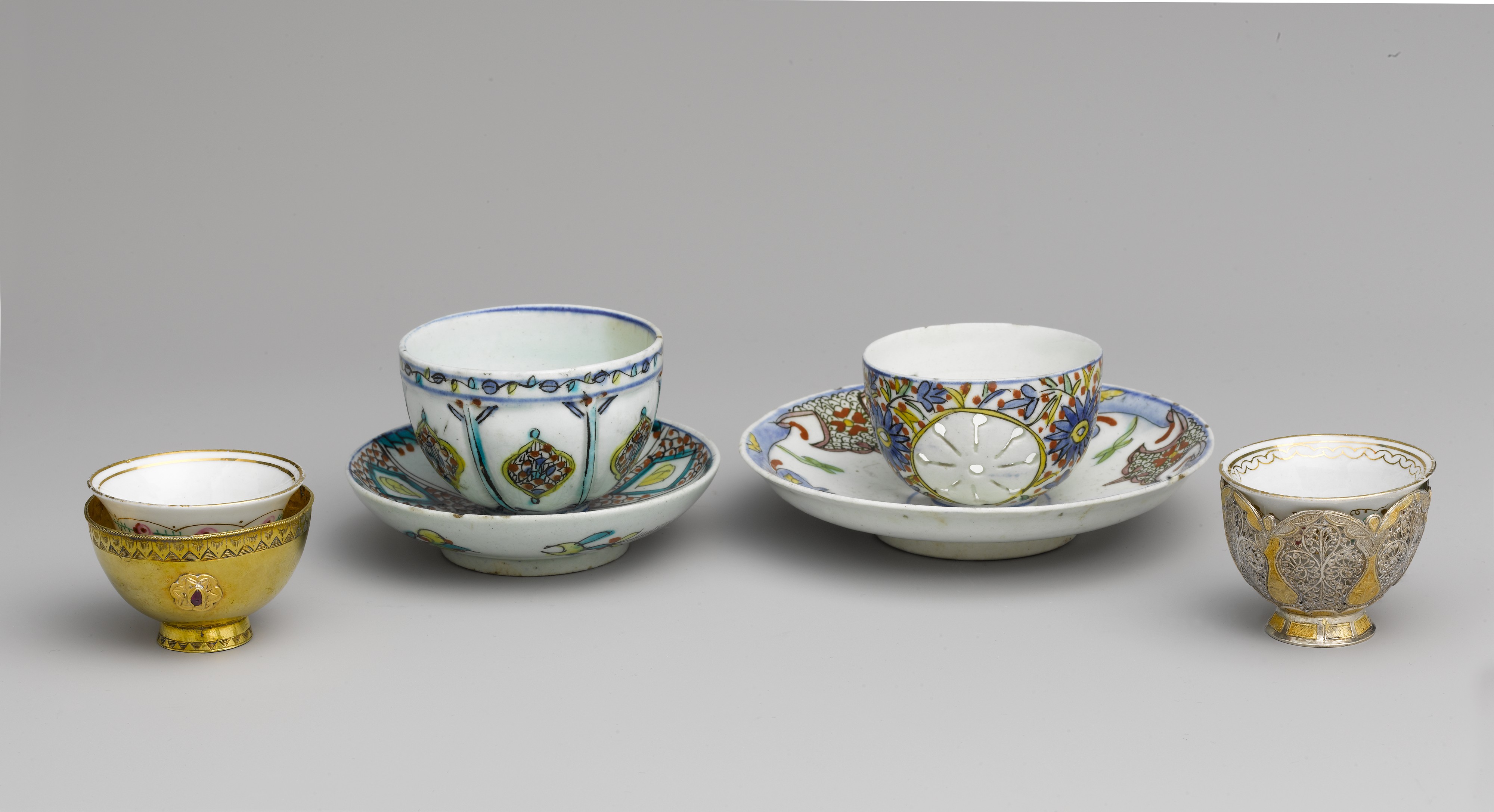 18th-century Ottoman coffee cup and saucer, made in Kütahya. The Metropolitan Museum of Art. This cup and saucer is typical of the objects that were stored in open niches in reception rooms of upper-class Syrian homes during the Ottoman period.
There is no single reason why the fincan - the Turkish coffee cup - is so small. Its capacity usually ranges from 60 to 90 - 110 ml. It can be said that its size reflects a combination of historical, economic, cultural, and taste-related aspects of how coffee was consumed at the time.
Ottoman coffee - which was historically served in fincans - was highly concentrated. In the 15th - 17th centuries, coffee was brewed from finely ground beans in a small amount of water without filtering. The result was a very thick, rich, and intense drink.
Coffee was served immediately after preparation, and the small fincan helped the drink cool down faster while retaining its aroma. The cup itself was easy to hold in one hand or even with just three fingers - the thumb, index finger, and middle finger. Because the coffee was unfiltered, grounds remained at the bottom of the fincan. The small volume of the Turkish coffee cup made it possible to drink almost all the coffee while leaving only a small amount of liquid and the grounds at the bottom.
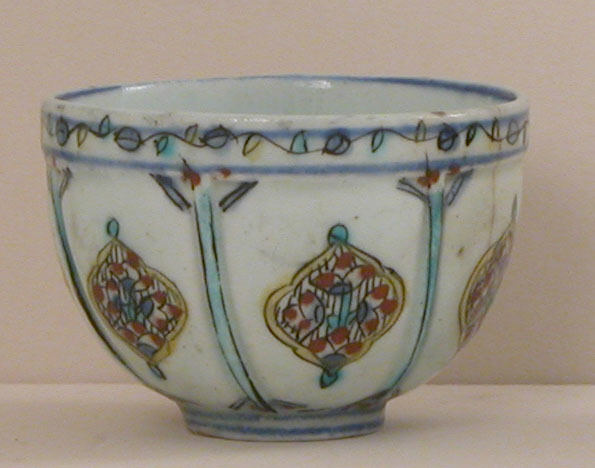 18th-century Ottoman coffee cup and saucer, made in Kütahya. The Metropolitan Museum of Art. This cup and saucer is typical of the objects that were stored in open niches in reception rooms of upper-class Syrian homes during the Ottoman period.
Coffee itself was an imported product and, because of its long and complicated journey from Yemen - through the Red Sea, Suez, Egypt, and Alexandria to Constantinople - it was expensive. Therefore, the smaller the serving, the greater the profit for the merchant. Coffee served in a fincan was enjoyed during conversations and games of chess or backgammon in the coffeehouses of the time - places where people gathered to discuss politics, news, the course of wars, and various kinds of gossip. Drinking coffee was a kind of ritual, and a small cup was enough to accompany a conversation. If it was not, the owners of the establishment were always happy to serve another portion, making an additional profit from it.
It may also be that China of that period left its mark on the size of the fincan. Some researchers believe that the first expensive fincans were often made of Chinese porcelain, the production techniques of which remained unknown in Europe until the 18th century. Chinese tea cups were already small, and the Ottomans may have partially borrowed their shape from Chinese tea ware, adapting it to the new beverage.