
What is a Fincan? The history of the traditional Turkish coffee cup
The modern small Turkish coffee cup is the result of centuries of historical development, rather than an unchanged form of coffee cup that has survived since the 16th century.
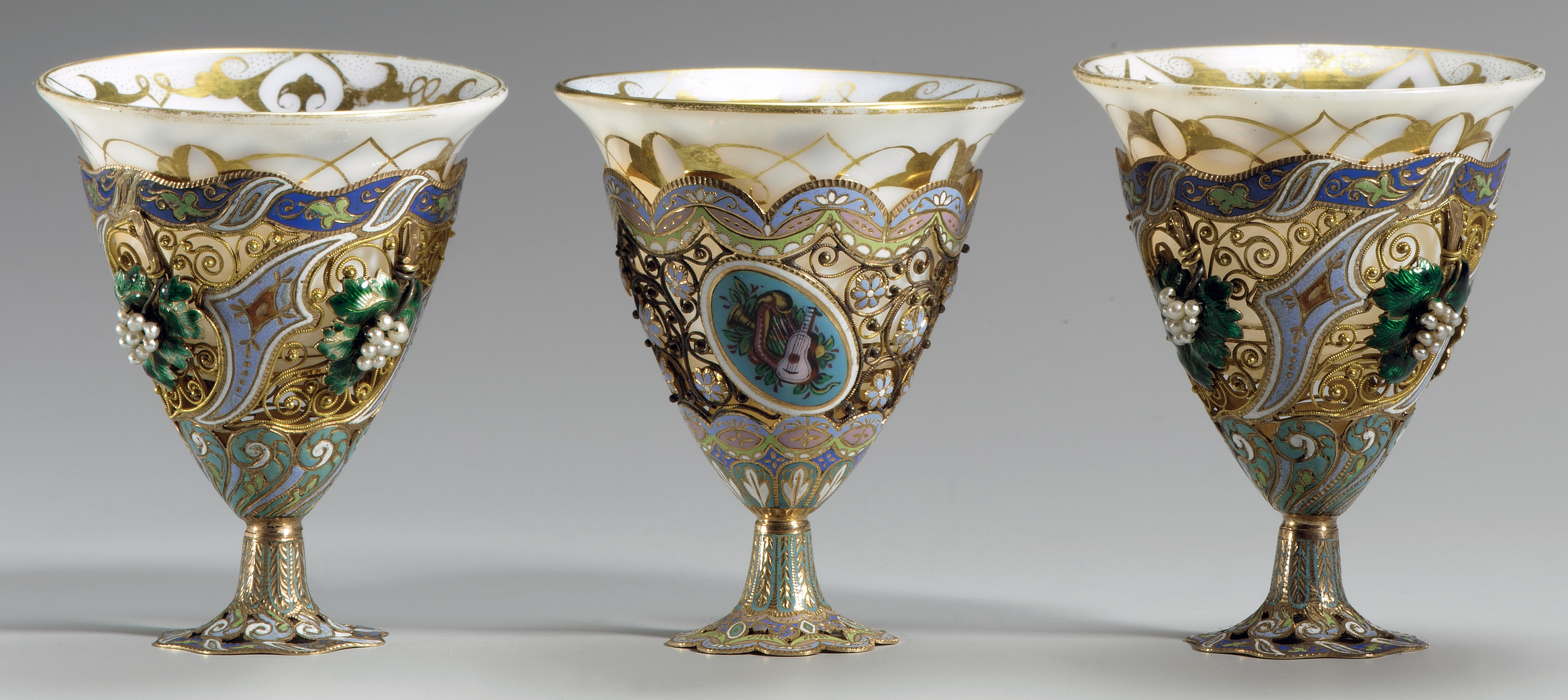 Khalili Collections - "Three Zarfs"
What Are Turkish Coffee Cups Called?
Fincan (Turkish: fincan) is the Turkish word for a cup and, in the context of coffee culture, most commonly refers to a small cup used for Turkish coffee.
The Turkish word fincan comes from the Ottoman fincan. Meninski's 1680 dictionary records the forms fincān and filcān. The word was borrowed from the Arabic فِنْجَان (finjān), while its earlier etymology is generally traced to the Classical Persian pingān, meaning a vessel or bowl.
Through the Ottoman Empire, the word spread across the Balkans. This gave rise, for example, to the Serbo-Croatian fildžan / findžan and the Macedonian филџан, where the word also refers to a small traditional coffee cup. Academic literature also uses the term fincan when discussing Ottoman coffee cups.
When coffee began to spread throughout the Ottoman Empire in the 16th century, small cups came to be used for serving it. Before the arrival of coffee, the fincan was not an object specifically defined by coffee culture. However, the growing popularity of the new drink created demand for more specialized drinking vessels.
An interesting detail can be found in late 16th-century Turkish poetry. The word fincan was already being used specifically in connection with coffee cups in the work of the poet Cinānī, where both kahve and fincān are mentioned.
History of Turkish Coffee Cups
In the early period of Ottoman coffee culture, Chinese porcelain was used for serving coffee. By the time coffee began spreading among the Ottomans in the 16th century, Chinese porcelain was already a prestigious imported commodity at the Ottoman court. Small Chinese cups and bowls were well suited to the new drink.
Chinese porcelain bowls and cups became one of the influences on the form and aesthetics of Ottoman coffee ware. Ottoman coffee cups made from Chinese porcelain have survived, including examples preserved in the collection of Topkapı Palace.
By the 16th century, the empire also had limited local production of ceramic coffee cups in İznik. Domestic production gradually expanded over the following century, particularly in Kütahya. İznik ceramics were typically characterized by a white body decorated with underglaze designs, although the specific colors, patterns, and shapes varied depending on the period and the individual object.
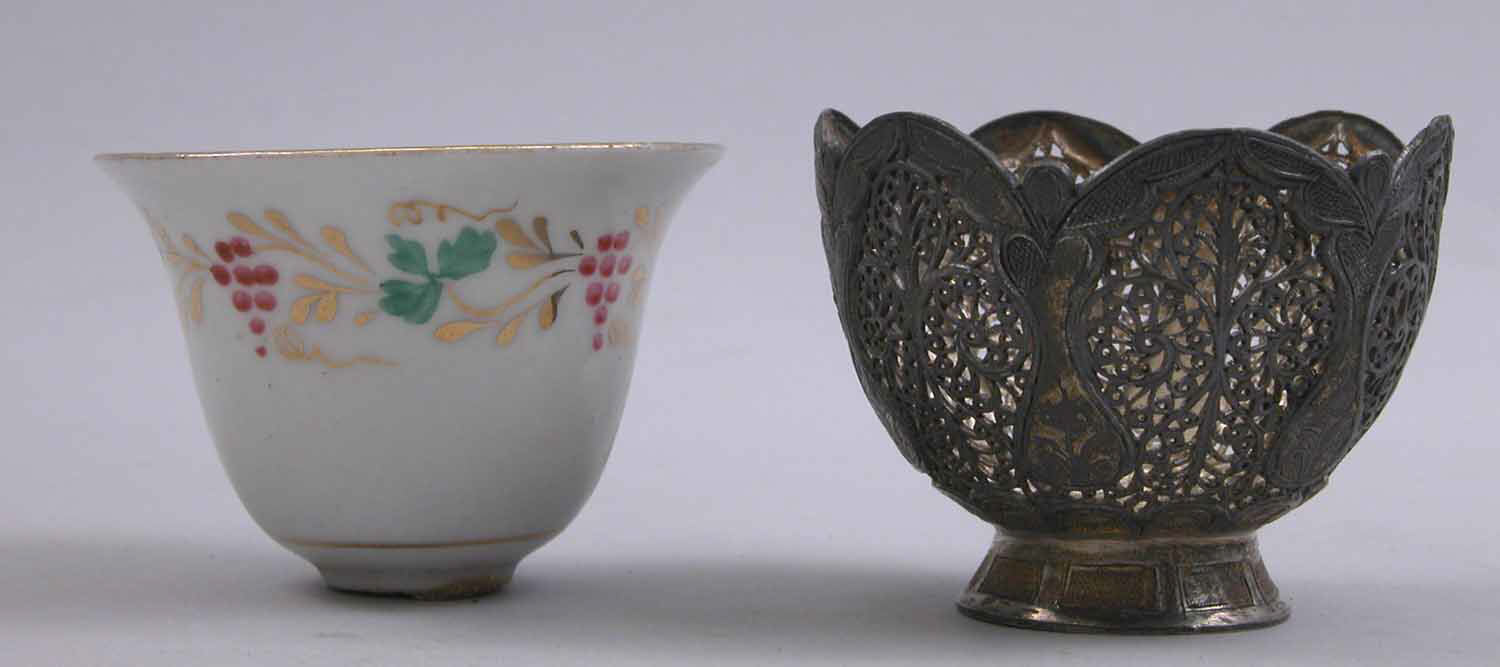
Traditional Ottoman Coffee Cup
In terms of shape, an Ottoman coffee cup of the 16th and 17th centuries looked more like a small bowl than a miniature version of a modern European coffee cup.
It was round, small, made of porcelain or ceramic, had no handle, and had an open top. Some examples also had a small foot or raised base.
Zarf - Turkish Coffee Cup Holder
A special holder known as a zarf was developed for the coffee cup. It helped the drinker hold a hot, handleless cup while also serving as a decorative object.
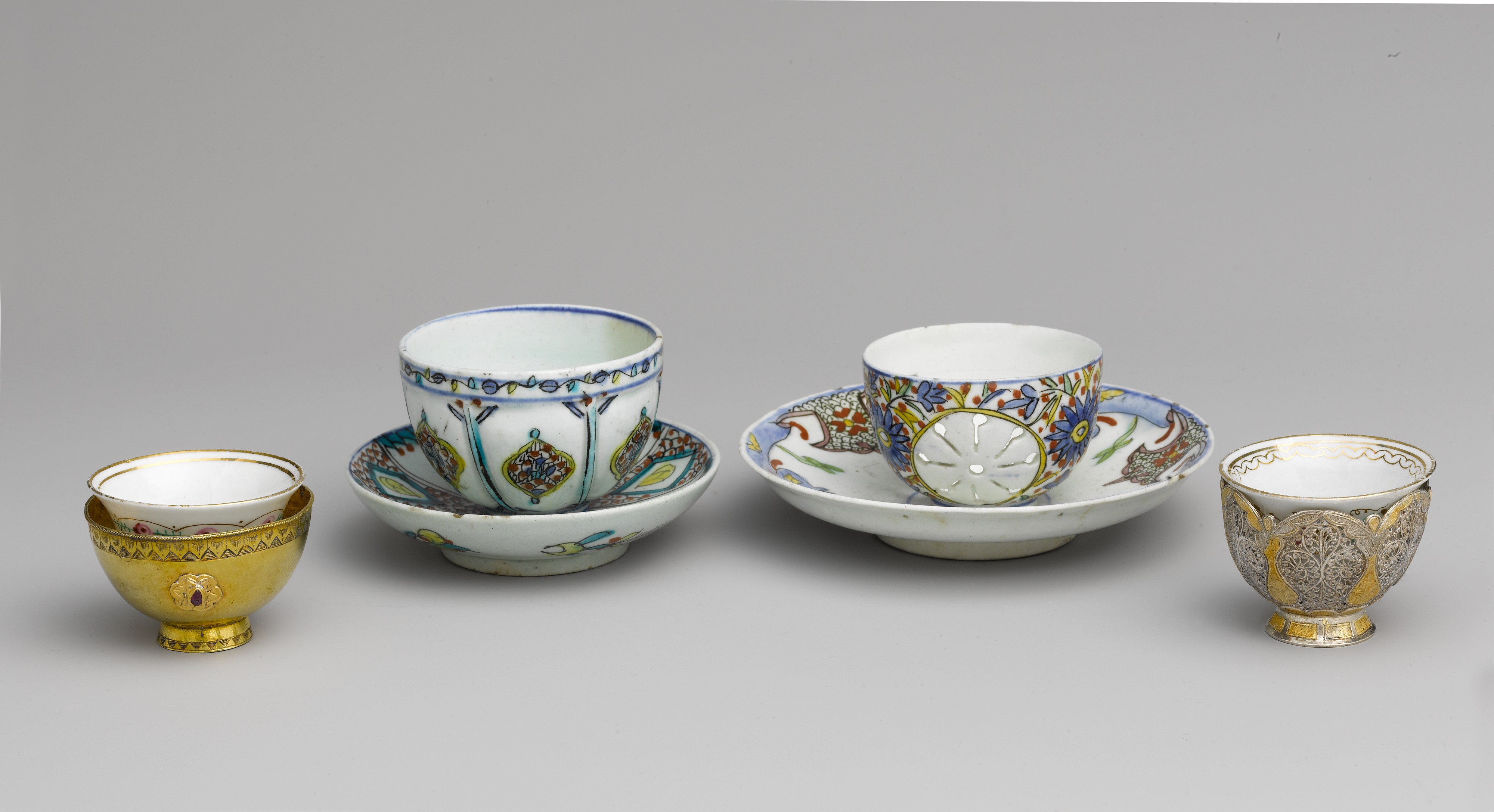
In wealthy Ottoman households, zarfs could be made from silver, gold, or gilded copper and decorated with elaborate ornamentation or precious stones. Simpler versions were made from less expensive metals.
The word zarf itself is associated with the idea of a "covering," "case," or something that encloses another object. This is also the origin of the modern Turkish word zarf, meaning "envelope."
The practice of placing a handleless coffee cup inside a metal fincan zarf did not appear immediately with the introduction of coffee to the Ottoman Empire. By the 18th and 19th centuries, however, it had become widespread.
Ottoman estate inventories from the 18th century list specific objects such as porcelain fincans with zarfs, silver fincan zarfs, and copper enamelled zarfs. These records provide evidence that the cup and its holder were used together as a set.
The Museum of Islamic Art in Doha also has an Ottoman coffee-cup zarf in its collection.