
Sigmund Freud and Café Landtmann: the history of Vienna's famous coffeehouse
Viennese coffeehouses were more than just places to drink coffee - they were an essential part of the city's cultural and intellectual life. One of the most famous was Café Landtmann, whose visitors included Sigmund Freud. What brought the founder of psychoanalysis to this coffeehouse, and what stories connect him to this establishment? Let's separate the documented facts from the legends.
I have already written about how coffeehouses in the Ottoman Empire served as a kind of gentlemen's club - places where men gathered to enjoy coffee, listen to music, play chess or backgammon, gossip (because what would life be without a little gossip?), catch up on the news, or make business deals.
In Vienna, the main capital of the Austro-Hungarian Empire (the other was Budapest), where Sigmund Freud lived and worked (from 1891 to 1938, he lived and practiced at Berggasse 19), coffeehouses were also an essential part of the city's intellectual life. They served as meeting places for doctors, scientists, athletes, and writers.
Freud's name, in particular, is often associated with Café Landtmann, which opened in 1873 on Vienna's Ringstrasse and became one of the most famous coffeehouses in the Austro-Hungarian Empire.
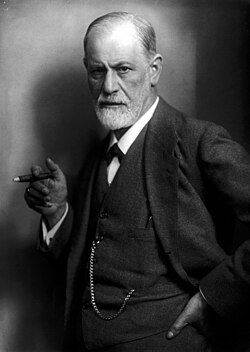 Sigmund Freud, circa 1921. Photograph by Max Halberstadt.
Was Freud really a regular visitor?
Freud was indeed one of the historically documented visitors to Café Landtmann. He is mentioned in the café's official history, as well as in publications by the City of Vienna and other historical sources. You may also come across stories online about "Freud's favorite table," but these are most likely legends, as there is no documented evidence to support them - no letters, diary entries, receipts, or eyewitness accounts.
An article published by the Freud Museum in London, which explores his daily habits Freud's Daily Routine, states that after work, Freud would walk along the Ringstrasse with his wife, sister-in-law, or daughters. Sometimes they would stop at a café to read newspapers. According to the museum, Freud visited Café Landtmann in the summer and Café Central in the winter.
The Austrian public broadcaster ORF also names Landtmann among Freud's favorite cafés.
There is a widespread claim that Freud held his professional meetings at the café. However, this is not entirely accurate. As early as 1902, he began gathering a small group of physicians and interested intellectuals at his apartment at Berggasse 19. These meetings became known as the Wednesday Psychological Society, which later developed into the Vienna Psychoanalytic Society. The main meetings took place at Freud's home.
For Freud, the café was primarily a place to relax in the evening after a long day of seeing patients. At the same time, Café Landtmann's current menu explicitly mentions Freud's informal "sessions" and his conversations with the writer Karl Kraus.
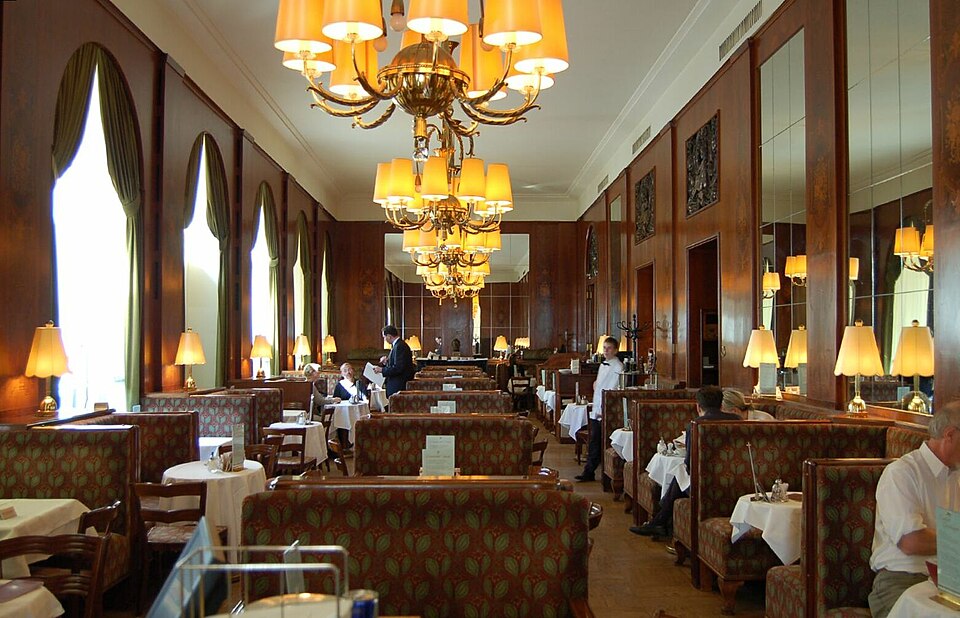 Interior of Café Landtmann, Vienna, 2006. Photo: Joe Ross, CC BY-SA 2.0, via Wikimedia Commons.
What did Freud drink?
There is an account suggesting that Freud used to order a Kleiner Brauner - a small black coffee served with milk or cream, usually on the side.
A literary account of Vienna in 1913 also mentions his cigar, evening gatherings, and a table on the terrace of Café Landtmann. Unfortunately, however, this is merely a historical description rather than a documented coffee order placed by Freud.
Kleiner Brauner A traditional Viennese coffee made with a small serving of black coffee, accompanied by milk or cream. It is one of the drinks associated with Freud, although no records of his actual coffee orders have been preserved.
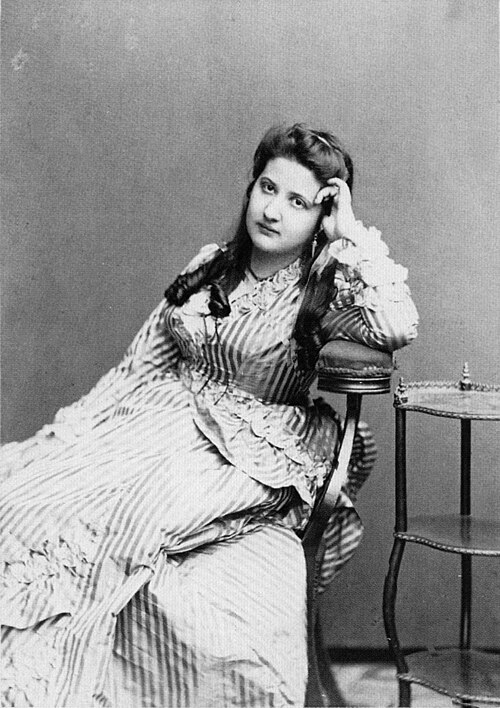
Freud and Anna von Lieben: an interesting connection to the Café
One of the most intriguing stories was published by the Austrian broadcaster ORF. According to the article, the young Sigmund Freud met Anna von Lieben at Café Landtmann. She came from a wealthy Viennese family and later became one of his well-known patients.
In psychoanalytic literature, she is associated with the case described under the pseudonym Cäcilie M. in Studies on Hysteria. However, the exact circumstances of their first meeting remain unknown.
What happened to Café Landtmann after Freud?


In 1938, following the annexation of Austria by Nazi Germany, Sigmund Freud, who was of Jewish descent, was forced to leave Vienna. He moved to London, where he died in September 1939.
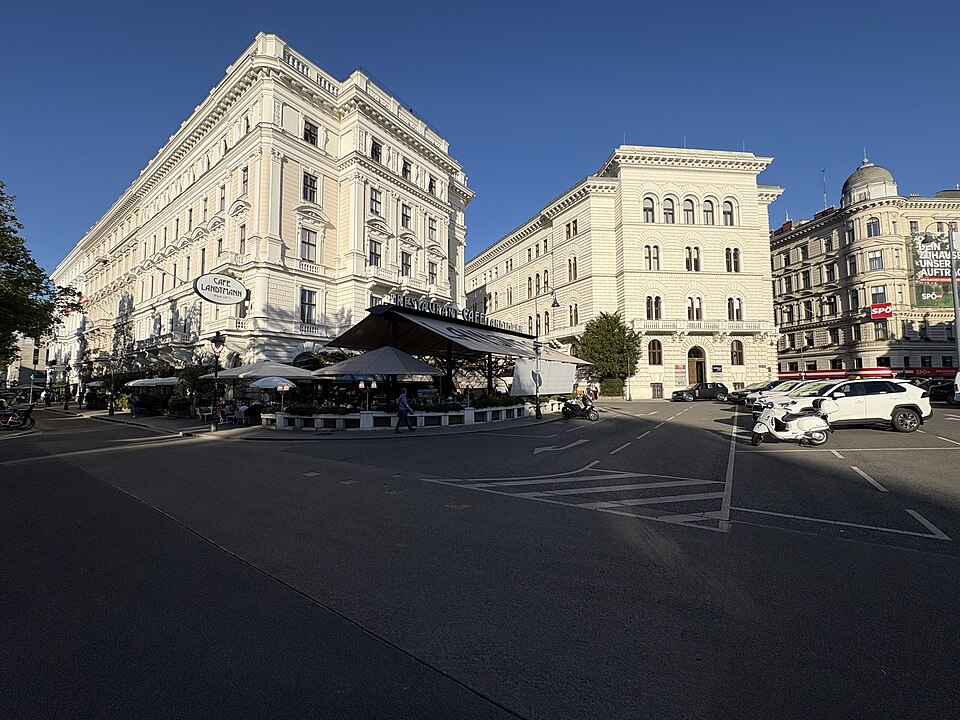
Café Landtmann survived the Nazi era, World War II, and the postwar decades. In 2023, the café celebrated its 150th anniversary. Today, it remains open at Universitätsring 4 in Vienna.